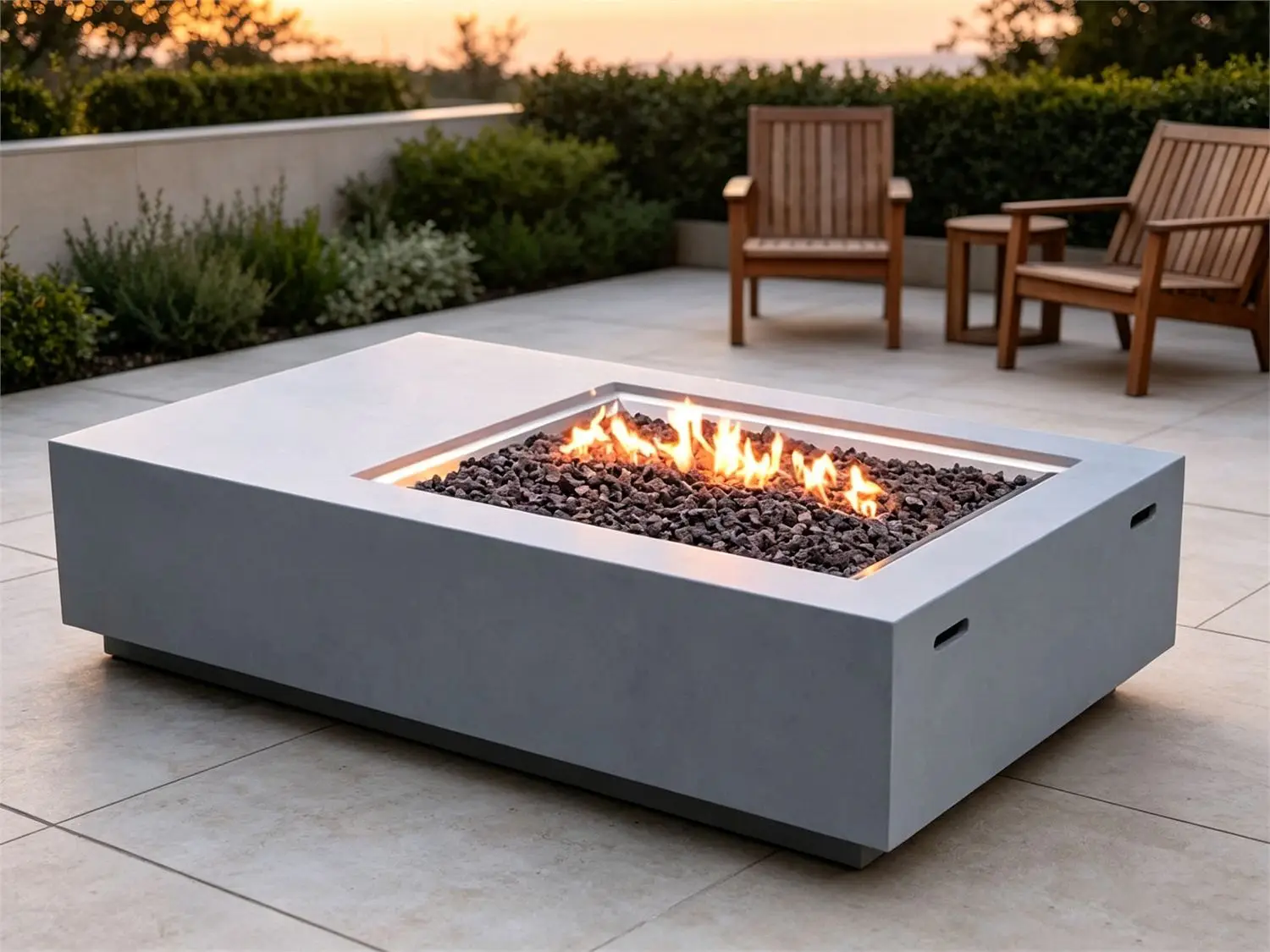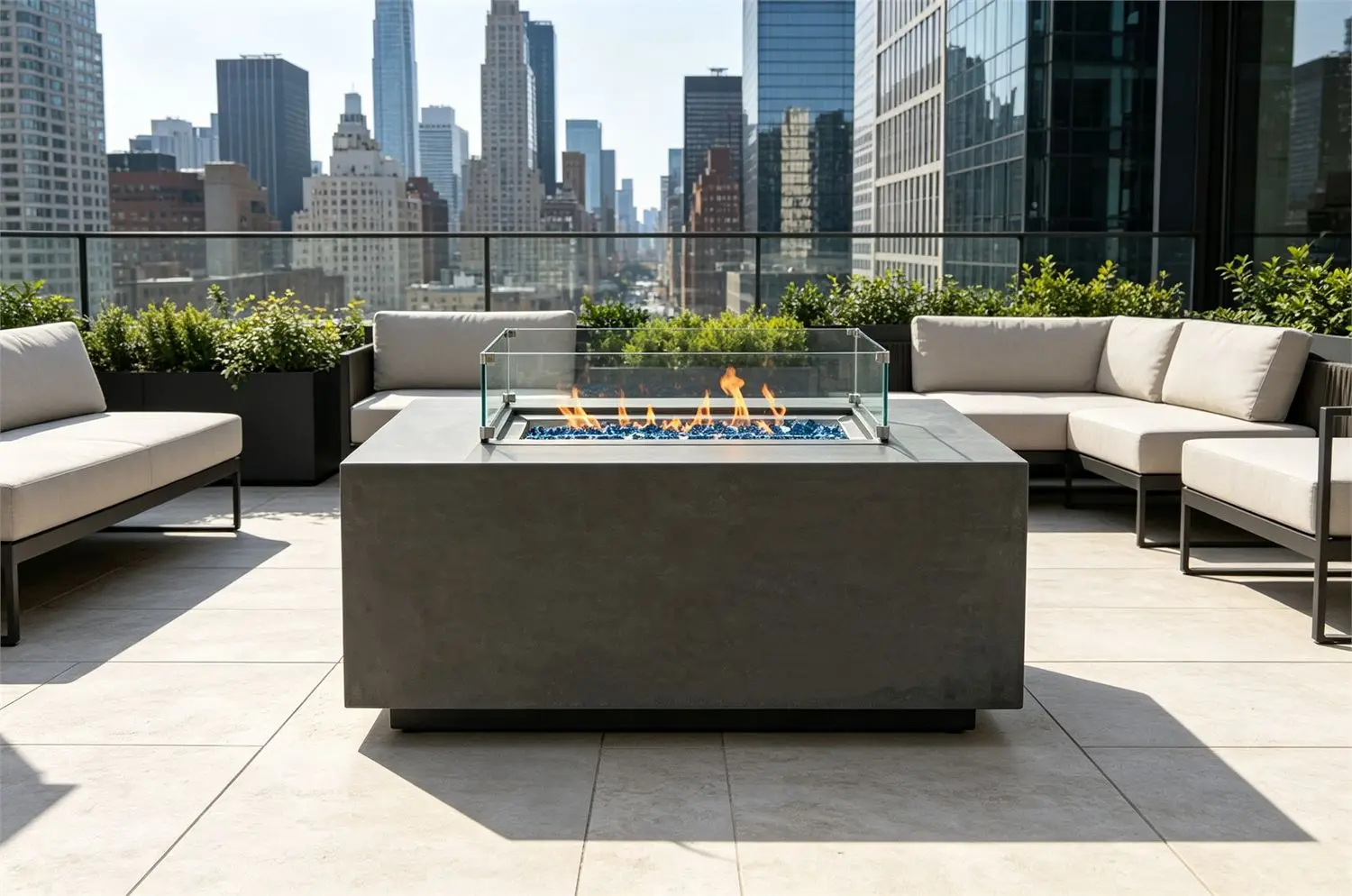

A buyer in Texas asks for GFRC. A buyer in Manchester asks for GRC. A buyer in Dubai asks for GRC as well. All three are asking for the same thing, and the quotation that comes back should describe the same material — but the documents attached to it usually differ.
One material, two regional names
GFRC stands for glass fibre reinforced concrete and is the term used in North America. GRC stands for glass reinforced concrete and is the term used in the United Kingdom, the Middle East and much of Asia. Both describe a cementitious mix reinforced with alkali-resistant glass fibres, cast into a mould and cured.
The distinction is linguistic and commercial, not chemical. When a fire pit table is described as GRC in a UK tender document and as GFRC on a US purchase order, the shell being built can be identical.
Why the fibre is there at all
Plain concrete is strong in compression and weak in tension. A fire pit table is a thin shell, so tension is exactly what it sees: the base carries the tabletop, the tabletop carries the burner, and both are handled, lifted and moved before they ever hold a flame. Glass fibres carry that tensile load through the section instead of letting it crack.
- Thinner sections than unreinforced concrete at the same strength, which keeps a large tabletop from looking heavy.
- Complex shapes — round columns, pedestal bases, linear troughs — can be cast without a steel frame in the way.
- Lower weight per square metre of tabletop, which matters for freight and for installation on roof terraces.
- Better crack resistance through shipping and handling than a plain cast mix.
What actually changes between a GFRC and a GRC order
The name does not change the mix design, the fibre content, the cure or the finish. What changes is the standard a buyer cites, the test documentation that ships with the goods, and the vocabulary used on drawings and certificates.
That matters in two places. First, a specification written against one term and quoted against the other can look like a substitution to a procurement team even when nothing was substituted. Second, certification and test reports are issued against a standard, not against a marketing word — so the paperwork has to be read for what it tests, not for which abbreviation appears in the title.
Five questions that settle it before you order
- Which term does your specification use, and does the supplier quote that term back consistently?
- What fibre content and mix design does the supplier work to, stated in writing?
- How is the unit cured, and what is the measured wall thickness at the base and the tabletop?
- Which surface finish is being quoted, and is a physical sample available?
- Which gas certification covers the burner assembly for your market?
The catalogue on this site writes GFRC throughout and notes the GRC equivalent wherever the distinction could cause confusion. Every model is cast in the same glass fibre reinforced concrete regardless of which word the buyer prefers.
The short answer
If you are buying for North America, say GFRC. If you are buying for the UK, the Gulf or much of Asia, say GRC. Then check that the quotation, the drawing and the test report all describe the same shell — that is where the real risk sits, not in the abbreviation.